

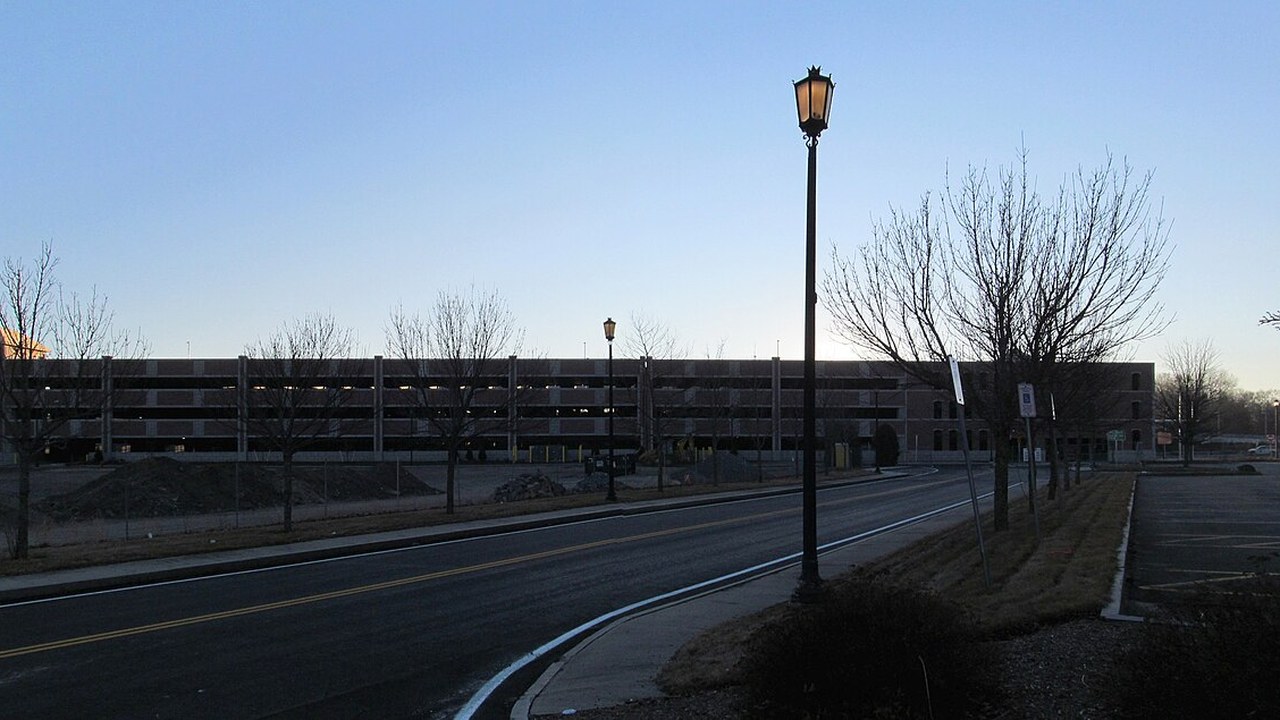
Almost every Texan who lives near a downtown has driven past it: a multistory concrete parking deck, built with public money, with the upper floors sitting empty most of the day while a free surface lot across the street fills up first. The sight raises a fair question for a taxpayer. A structured parking garage is one of the most expensive things a city can build per space, and when it sits underused, residents are entitled to ask whether the money is earning its keep.
This article does not single out one Texas garage as a failure, because that is a claim a resident should be able to verify with documents rather than take on faith. Instead, it explains why parking garages so often end up underused, what a structured space actually costs, and — most usefully — how a Texan can pull the public records that show whether a specific garage in their own city is paying for itself.
Why parking decks cost so much
Structured parking is far more expensive than a flat lot because it requires ramps, ventilation, drainage, lighting, and reinforced concrete. According to the Victoria Transport Policy Institute’s transportation cost analysis, a single structured parking space in much of the United States costs roughly $25,000 to $50,000 to build, depending on land, design, and local construction prices. At those numbers, a garage running into the millions of dollars typically adds only a few hundred spaces. Every space that sits empty on a given day is public investment earning no return that day.
Decades of research by UCLA urban planning professor Donald Shoup, summarized in his book The High Cost of Free Parking, argues that cities routinely oversupply parking and then compete against their own paid decks by offering free or cheap street and surface parking nearby. When a city markets free lots a block away, the paid garage faces a built-in disadvantage.
Why Texas garages can look empty
Several forces push toward underuse, and they apply across Texas. Many downtown garages were sized for peak demand — a festival weekend, a stadium event, a holiday shopping rush — which means they are designed to sit partly empty the rest of the year. Hybrid and remote work has thinned weekday commuter parking in business districts. Ride-hailing lets visitors skip driving entirely. And in cities where surrounding surface lots are free or cheap, drivers naturally choose those first.
None of that proves a particular garage was a mistake. A deck that looks empty on a Tuesday afternoon may fill during an evening event or a seasonal surge. The honest way to judge it is not by eyeballing the upper floors but by looking at occupancy and financial data over a full year.
The numbers that tell the real story
To know whether a garage is performing, a resident needs three things: how full it actually is over time, how much revenue it brings in, and how much it costs to operate and to service any construction debt. A garage can be busy and still lose money if its debt payments outrun its parking revenue. It can also be quiet but financially fine if it was paid for up front and costs little to run.
Those figures rarely appear on a city’s website without being requested. Adopted city budgets, available through most Texas municipalities and tracked in part through the Comptroller’s local government transparency resources, will show debt service and major capital projects. But the granular operating and occupancy data usually has to be asked for.
How to request the records in Texas
Texas gives residents a strong tool: the Public Information Act, explained in the Attorney General’s Public Information Handbook. Under the Act, any person can ask a city for its records, and the city generally must respond promptly or, if it wants to withhold something, ask the Attorney General for a ruling. There is no requirement to explain why the records are wanted.
A resident curious about a local garage can send the city secretary or clerk a written request — email counts — asking for the garage’s monthly occupancy or utilization reports since it opened, its annual revenue and operating expenses, the original demand study used to justify building it, and the debt-service schedule for the construction bonds. The Attorney General’s open government page includes sample request language and explains the timelines a city must meet.
Reading the answer fairly
Once the documents arrive, the comparison is straightforward. Line up the demand projections that justified the project against the actual occupancy. Set parking revenue against operating costs plus debt service. If the garage is meeting its targets, the numbers will show it. If revenue consistently falls short of costs, the city is subsidizing the deck from its general fund — the same fund that pays for streets, police, and parks — and residents have standing to raise it at the next budget hearing.
It is worth approaching the data without a predetermined verdict. Seasonal cities, in particular, build for peaks and accept slow stretches; that can be a defensible choice if the peak revenue covers the year. The point of pulling the records is not to confirm a suspicion but to replace a guess with a fact.
There is also a useful question to ask about how the garage was justified in the first place. Most large public projects rest on a study — a demand projection or feasibility analysis — that estimated how many cars would use the structure and how much revenue it would generate. Those projections are themselves public records. Comparing what the study promised against what the garage has actually delivered is often more revealing than the raw occupancy figures alone, because it shows whether the project met the expectations on which the city council based its vote. A garage that is busier or quieter than projected tells residents something about how reliable the city’s planning estimates are for the next project, too.
Why this matters beyond one garage
Parking is a small line in a city budget, but it is a useful test case for how local government spends money. A garage is concrete and visible; a resident can literally see whether the upper decks are full. The same public-records muscle that answers the parking question works for any capital project a city undertakes — a convention center, a sports facility, an economic-development incentive. Texans who learn to file a clean Public Information Act request once can use it on every project that follows.
The honest conclusion about any single Texas garage is the one the documents support. Until a resident has the occupancy and financial records in hand, “nobody uses it” is an impression, not a finding. The tools to turn the impression into a verified answer are free, and they belong to every taxpayer in the state.
This article was produced with AI assistance and reviewed by a human editor. Figures are linked to their primary sources; where a claim could not be verified from the public record, we say so.