
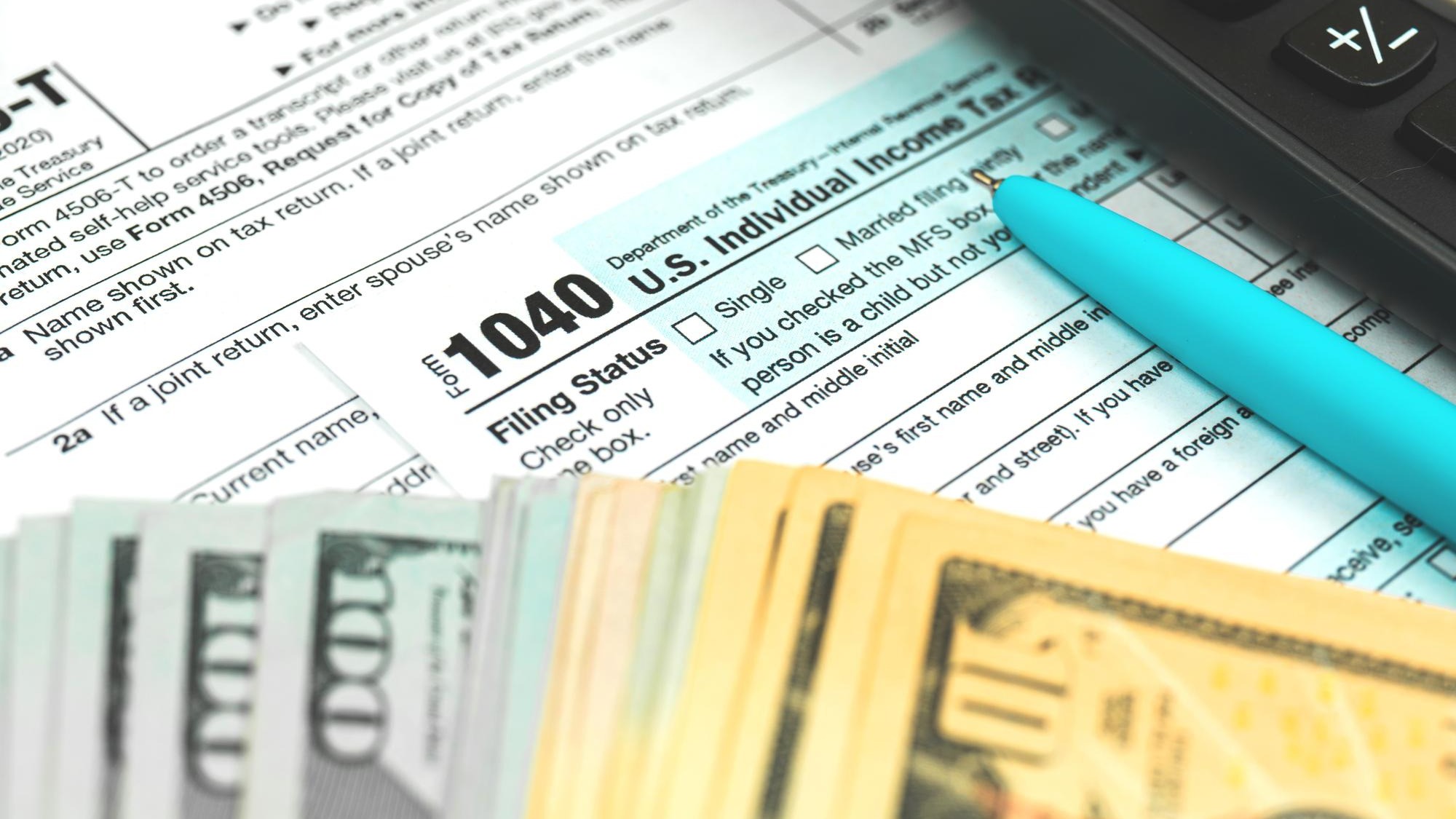
In April 2026, roughly 150 million Americans filed their federal tax returns. Within weeks, the Government Accountability Office delivered the receipt: agencies across the federal government made an estimated $186 billion in improper payments during fiscal year 2025, a $24 billion spike from the prior year. That works out to roughly $1,240 for every household in the country, sent to the wrong person, in the wrong amount, or with no documentation to justify it at all. Criminal indictments, audit findings, and congressional investigations filled in the details. Here are 10 of the most absurd ways the federal government spent your tax dollars this year.
1. $153 billion in overpayments that nobody clawed back
Of the $186 billion the GAO flagged for fiscal year 2025, roughly $153 billion were classified as overpayments. That means the government sent more money than it owed or sent money to people who should not have received it. GAO’s Acting Comptroller General called the figure “a significant loss to taxpayers” in the agency’s official press release. For scale, $153 billion is nearly double the Department of Education’s annual discretionary budget. Recovery rates on federal overpayments have historically hovered in the single digits as a percentage of total losses, which means most of that money is gone for good.
2. Billions in Medicaid checks sent during a paperwork pileup
Medicaid was the single largest contributor to the improper payment total. When the COVID-19 public health emergency ended, states were required to redetermine eligibility for millions of enrollees who had remained on the rolls under continuous-coverage rules. The backlog was enormous. According to CMS’s fiscal year 2025 improper payments fact sheet, provider screening gaps and outdated enrollment records produced a wave of payments to people who no longer qualified or had moved out of state. States were processing redeterminations at such volume that basic verification steps were skipped. The federal government kept writing checks anyway.
3. Benefits paid to dead people, for the umpteenth year in a row
This problem is so persistent it has become a dark running joke in federal oversight circles. GAO’s government-wide review again found that agencies paid benefits to deceased individuals because they failed to cross-check payment rolls against death records maintained by the Social Security Administration. Congress has passed multiple laws requiring agencies to use the SSA’s Death Master File before issuing payments. Many still do not do so consistently. GAO has flagged this issue in reports stretching back more than a decade, and prior estimates have placed the annual cost in the hundreds of millions of dollars. The FY2025 total attributable to deceased recipients is not broken out separately in GAO’s topline data, but the fact that the problem persists at all, after years of explicit congressional mandates, is its own indictment.
4. An airman who allegedly bought luxury cars with Pentagon procurement funds
A Tucson-based airman and his spouse were indicted for allegedly defrauding the Department of Defense of millions of dollars. According to IRS Criminal Investigation, the couple used shell companies and falsified invoices to siphon taxpayer funds through military procurement channels. The proceeds allegedly went toward luxury vehicles and a home. The scheme reportedly ran for years before internal controls caught anything unusual. Both defendants are presumed innocent and have not been convicted, but the indictment lays bare how vulnerable military procurement can be when a single insider decides to exploit weak oversight.
5. A VA employee who charged $198,000 in electronics to a government credit card
A former Department of Veterans Affairs employee in northern Ohio was sentenced to prison after racking up $198,183.84 in unauthorized purchases on a government-issued purchase card. The U.S. Attorney’s Office for the Northern District of Ohio confirmed the employee primarily bought consumer electronics intended for resale. The charges accumulated to nearly $200,000 before anyone at the VA flagged the account. The employee acted alone. “Government purchase card fraud undermines the programs our veterans depend on,” said Kenneth Parker, then-U.S. Attorney for the Northern District of Ohio, in a statement announcing the sentencing. The GAO has separately noted that purchase-card oversight varies widely across agencies, with some lacking even basic transaction-level review protocols.
6. Unemployment insurance fraud still echoing from the pandemic
Unemployment insurance programs have been on GAO’s improper payment watch list for years, and fiscal 2025 brought no relief. The pandemic-era explosion of UI fraud, which the Department of Labor’s Inspector General has estimated at more than $100 billion across fiscal years 2020 through 2023, continues to distort the numbers. States are still trying to recover funds sent to fraudulent claimants who used stolen identities, filed in multiple states simultaneously, or collected benefits while employed. GAO’s FY2025 totals include ongoing UI improper payments that reflect both unresolved pandemic-era losses and newer errors in states that have not yet upgraded their identity-verification systems. The legacy of those emergency-era programs is a fraud tab that keeps growing even as the programs themselves wind down.
7. Tax credits sent to people who did not qualify
The Earned Income Tax Credit and the Additional Child Tax Credit have some of the highest improper payment rates of any federal program, and fiscal year 2025 was no exception. GAO’s data shows these credits again contributed billions to the overall total. The IRS has acknowledged that the complexity of eligibility rules, combined with the agency’s limited ability to verify income and household composition before issuing refunds, makes these credits especially error-prone. Some payments go to filers who made honest mistakes navigating a tangled set of requirements. Others go to claimants who deliberately inflate their returns, aware that the IRS lacks the staffing to audit most low-dollar filings before refund checks go out.
8. Hundreds of millions on a National Guard deployment with murky objectives
A staff report from the Democratic minority on the Senate Homeland Security and Governmental Affairs Committee found that the Trump administration’s National Guard deployment in Washington, D.C., cost taxpayers hundreds of millions of dollars. Senators Gary Peters and Andy Kim released findings questioning the deployment’s strategy and effectiveness, arguing that the mission’s objectives were never tied to measurable security outcomes. The Defense Department has not released transaction-level cost data, and no inspector general report has independently validated the estimate. Republican committee members have not issued a formal rebuttal. The figure should be treated as a partisan estimate until an independent audit confirms or revises it, but even a conservative reading points to an enormous bill for a domestic deployment with no publicly defined endpoint or success criteria.
9. Agencies that cannot even track where the money went
A separate GAO report on federal spending transparency found systemic weaknesses in how agencies disclose and categorize expenditures. In plain terms: some agencies cannot tell auditors where portions of their budgets ended up. When documentation is missing or incomplete, payments get classified as “improper” by default, but no one can determine whether the money was wasted, stolen, or simply lost in a filing system. This is not a rounding error. It is a structural failure in federal bookkeeping that makes every other number on this list less reliable than it should be.
10. A $24 billion increase in waste despite two decades of reform promises

The most absurd entry on this list is not any single expenditure but the trajectory. Improper payments jumped $24 billion in a single year, from roughly $162 billion in fiscal 2024 to $186 billion in fiscal 2025. Congress has passed multiple laws targeting the problem since 2002, including the Improper Payments Elimination and Recovery Act and the Payment Integrity Information Act. Agencies have deployed data analytics tools, hired fraud prevention officers, and stood up dedicated recovery units. The number keeps climbing anyway. GAO has published recommendations calling for better data-sharing between agencies and more frequent eligibility checks in high-error programs, but implementation has been slow and uneven. After more than 20 years of reform legislation, the federal government is losing more money to bad payments than at any point on record.
What the self-reported totals leave out
Every figure cited above comes with a caveat: the $186 billion total is based on what agencies self-report. GAO does not independently audit every program. Agencies with the weakest internal controls are also the least likely to catch and disclose their own errors, which means the programs leaking the most money may be the least visible in the data. Criminal cases like the Tucson airman indictment and the Ohio VA fraud only surface when someone files a tip or an auditor stumbles onto a discrepancy. For every scheme that gets caught, an unknown number continue undetected.
The confirmed numbers are already staggering. The gaps in the data suggest the real total is higher. GAO has recommended that Congress mandate real-time transaction monitoring and replace agency self-reporting with independent verification. Neither reform has been enacted. Until that changes, the annual improper payment figure will likely keep setting records.