

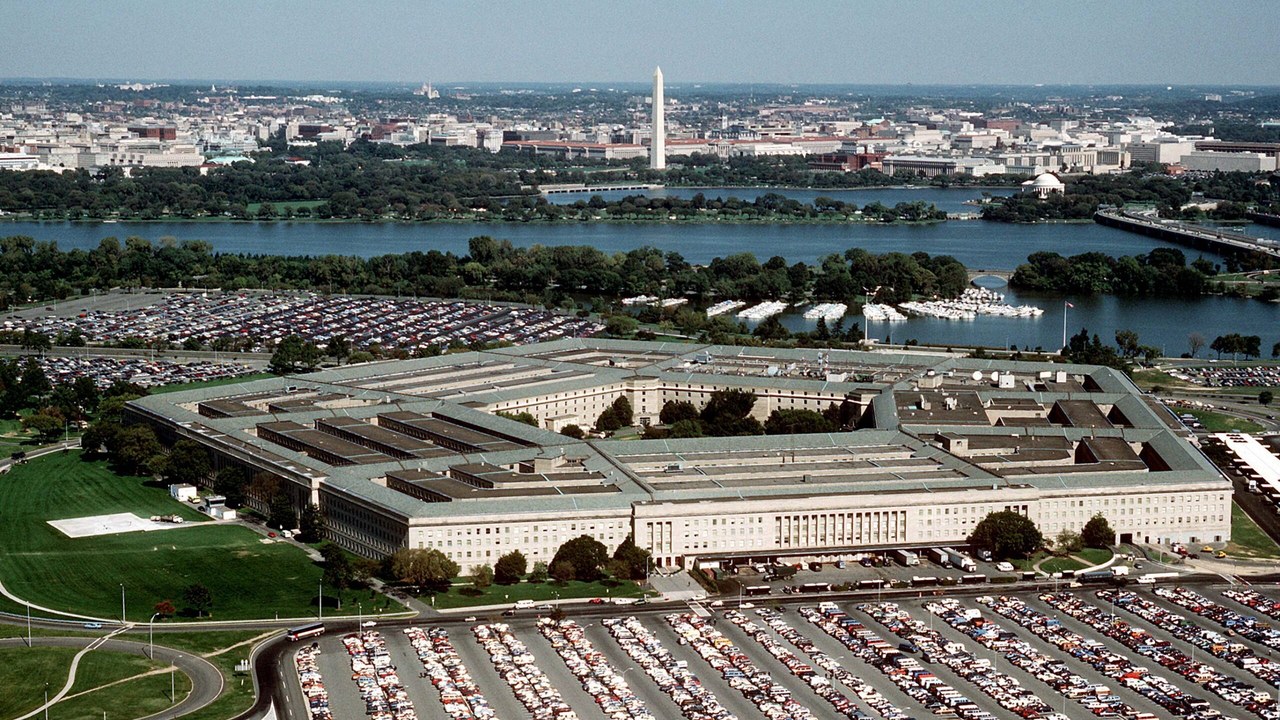
Texas is one of the most heavily militarized states in the country. Fort Hood near Killeen, one of the largest Army posts in the world; Fort Bliss outside El Paso; and Joint Base San Antonio, the largest joint base in the Department of Defense, anchor a defense footprint that employs hundreds of thousands of Texans and pours billions of dollars into local economies. So when the Pentagon cannot pass a basic financial audit, the failure is not abstract for Texas. The assets, payrolls, and contracts it cannot fully account for sit, in part, right here.
This piece explains what the Pentagon’s repeated audit failures actually mean, why the problem has proven so stubborn, and how the Texas defense presence fits into a department that has never once passed a clean audit. The aim is to separate the real accountability problem from the easy outrage, because the truth is striking enough on its own.
What the audit failures actually are
Since Congress required the Department of Defense to undergo an annual financial audit beginning with fiscal year 2018, the department has failed every one. It is the only one of the federal government’s two dozen major agencies never to earn a clean opinion. In late 2025 the Pentagon announced it had failed again, marking the eighth consecutive year without a passing grade, as reported by Military Times and others. The streak that began at one has now reached eight.
It is important to be precise about what “failing” means here, because it is widely misunderstood. A failed audit does not necessarily mean money was stolen. In Pentagon terms it usually means a “disclaimer of opinion,” meaning auditors could not gather enough reliable documentation to form a judgment about whether the department’s books are accurate. As the fact-checking outlet Snopes has noted, the failures reflect an inability to fully track and verify assets, not proof of mass theft. The accountability problem is real, but it is a bookkeeping failure, not a heist.
The scale of what cannot be accounted for
The numbers are still enormous. The department manages on the order of trillions of dollars in assets spread across all fifty states and thousands of locations worldwide, and a budget that runs well into the hundreds of billions each year. For the most recent audit, the inspector general’s office identified dozens of “material weaknesses,” the most serious category of accounting deficiency, in the department’s financial reporting.
The Government Accountability Office, the federal government’s nonpartisan watchdog, has long flagged Defense financial management as a high-risk area in its High Risk List. The core issue is that the department cannot reliably say where all of its money and property are. When auditors cannot trace assets to documentation, those items get flagged, and the sheer volume of flagged items is what keeps the department from passing.
Why it keeps failing
The Pentagon blames its own size and complexity, and there is genuine substance to that defense. The department’s assets are dispersed across thousands of installations and dozens of separate accounting systems, many of them decades old and not designed to talk to one another. Consolidating that into a single auditable picture is a massive undertaking, more like reconciling the books of a hundred large companies at once than auditing a single agency.
But the explanation only goes so far. After eight straight years of failure, critics point out that the department has had ample time and funding to modernize its accounting and still has not produced a clean audit. Congress, through the National Defense Authorization Act, has directed the department to achieve a clean audit by a target date, and Defense leaders have repeatedly restated their goal of reaching one by 2028, as Breaking Defense reported. That deadline has been pushed before.
Where Texas fits in
Because the Pentagon’s audit problem is system-wide, Texas’s large share of the defense enterprise is necessarily part of the unaccounted-for picture. The state hosts major installations across every branch, and their scale is documented in official numbers even where the audit itself does not break out a state. Fort Cavazos near Killeen — home to III Armored Corps and the 1st Cavalry Division — carries 59,695 direct employees and generates roughly $39 billion in annual economic output, according to Texas Comptroller economic-impact data. Fort Bliss, the Army’s premier air-defense training center outside El Paso, carries 41,220 direct employees and about $27.9 billion in output, per the Comptroller’s Fort Bliss figures. Joint Base San Antonio, combining Fort Sam Houston, Lackland, and Randolph into the department’s largest joint base, carries 67,350 direct employees and roughly $55 billion in annual output, according to the Comptroller’s JBSA figures. Combined, the three installations represent well over $120 billion a year moving through Texas — payroll, contracts, and operations that are part of the same books the Pentagon cannot get a clean opinion on. The Defense Department’s spending in Texas is also documented through federal contract and assistance records on USAspending.gov, which lets the public see where defense dollars flow by state.
The annual financial-statement audit itself issues its disclaimer of opinion department-wide, not base by base, so there is no public record tying a specific “material weakness” line item to Fort Cavazos, Fort Bliss, or JBSA by name. But a related, separate line of federal oversight does name Fort Bliss directly. A 2025 GAO report on underused and excess military facilities, GAO-25-106132, visited Fort Bliss and documented the kind of asset-tracking trouble that feeds the larger audit problem: officials there were still funding upkeep on vacant historic buildings because of the cost of properly disposing of them, and a renovation initially budgeted at $2.3 million ended up requiring another $19 million once the work proved insufficient. The report also found Fort Bliss unsure how it would fund the roughly $14 million cost of disposing of the old Beaumont Army Medical Center building — a real, documented instance of the same kind of asset-accounting gap that keeps the department as a whole from passing its audit.
None of that means anything improper is happening at a Texas installation. It means that when the department as a whole cannot reconcile its books, the Texas portion of those books — including real, GAO-documented gaps in how Fort Bliss tracks and funds its own facilities — is part of what cannot be fully reconciled. The state’s outsized defense footprint makes it a meaningful slice of the problem, even without a line item that says so.
What a clean audit would actually prove
It helps to be clear about what passing the audit would and would not accomplish, because the goal is often oversold. A clean audit opinion means the department can reliably document where its money and property are and that its financial statements are accurate. It is a statement about bookkeeping, not about whether the spending was wise. The Defense Department could pass an audit and still buy things the country does not need; it could fail one while spending every dollar sensibly.
What a clean audit chiefly delivers is the ability to trust the numbers, which is the foundation for every other kind of oversight. You cannot judge whether a program is wasteful if you cannot first confirm what it actually cost. That is why the GAO treats reliable financial reporting as a precondition for accountability rather than the finish line. For taxpayers, including the many Texans whose livelihoods are tied to the defense enterprise, a department that can finally account for itself is the starting point for asking the harder questions about whether the money is well spent.
The accounting systems that would have to change first
The everyday cost is indirect but real. When a department cannot track its own assets, it is harder to know whether it is buying things it already owns, paying for equipment it cannot locate, or leaving money on the table through poor inventory control. The GAO has tied weak financial management to wasted spending, and that waste is funded by federal taxpayers, Texans included.
The fix that auditors and outside analysts consistently call for is unglamorous: replace the patchwork of aging, incompatible accounting systems with modern ones that can produce a verifiable trail, and sustain the effort long enough to finish it. The Stimson Center and other budget researchers have explored why the department keeps falling short despite the mandate, pointing to the difficulty of modernizing systems at the Pentagon’s scale, a theme covered in outlets like the Stimson Center’s analysis. Until the department finishes that work, the annual audit will keep returning the same answer, and Texas’s large stake in the defense enterprise will keep being part of the ledger that does not balance.
This article was produced with AI assistance and reviewed by a human editor. Figures are linked to their primary sources; where a claim could not be verified from the public record, we say so.